23 November 2026 | Monday | Interaction
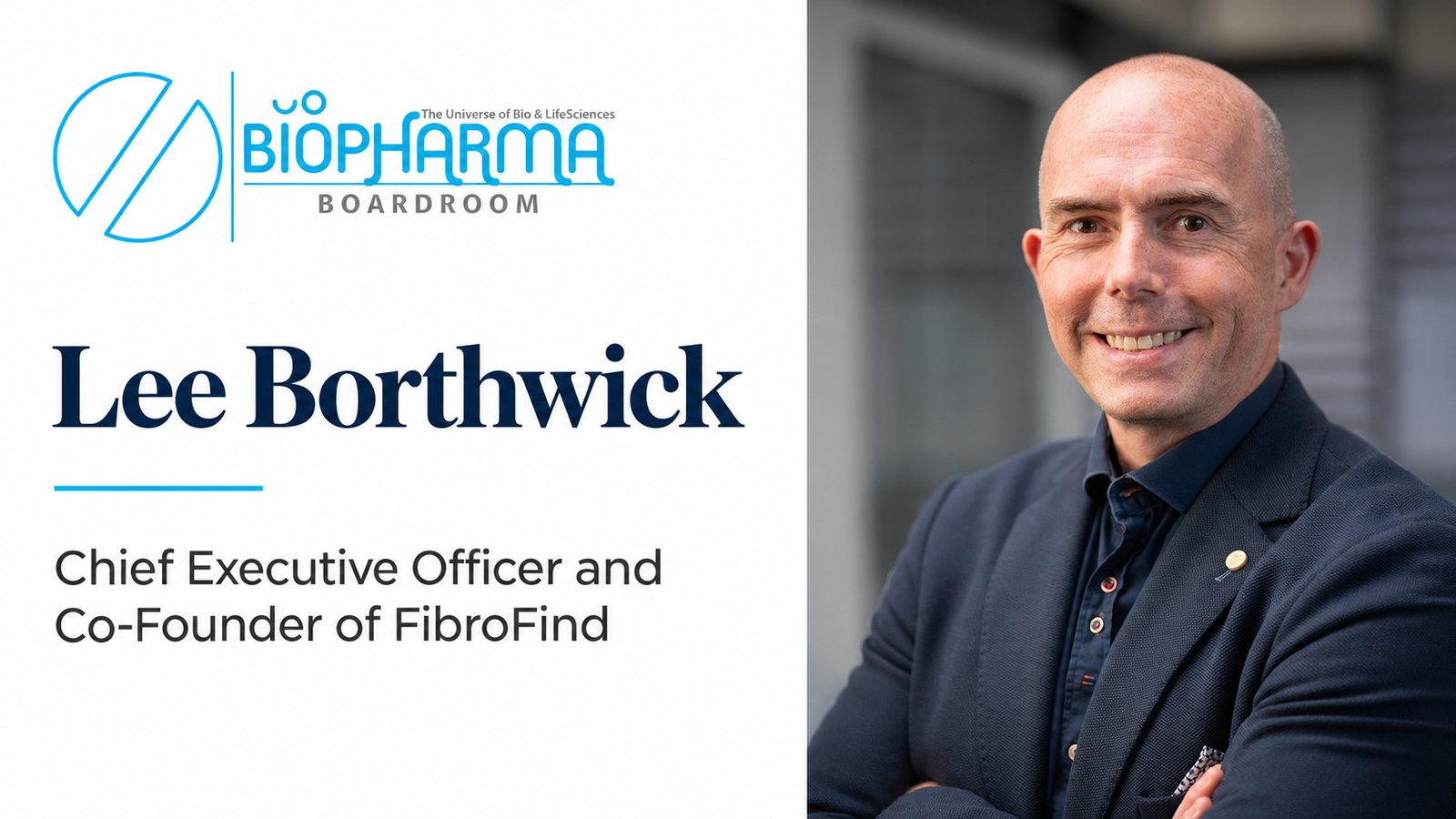
Bridging the gap between preclinical research and clinical outcomes remains a persistent challenge in drug development. In this interview with BioPharma BoardRoom, Lee Borthwick, CEO and Co-Founder of FibroFind, discusses the company’s human tissue-based precision-cut tissue slice (PCTS) platform, its proprietary bioreactor technology and the role of human-relevant models in evaluating therapeutic targets, assessing efficacy and identifying risks earlier. Borthwick also explores how AI-driven target discovery, regulatory developments and greater adoption of human tissue models could reshape preclinical research.
Can you share your career journey and what inspired you to establish FibroFind with a focus on human-relevant preclinical research?
My career has been spent in fibrosis research, with the last 21 years at Newcastle University. Throughout that time, what stayed with me was the gap between what we could demonstrate in the lab and what happened once a therapy reached patients. That translational gap, and the scale of unmet need in fibrotic disease, was the starting point for FibroFind.
Fibrotic diseases affect a large and growing number of patients [1]. Despite decades of research using conventional in-vitro and in-vivo systems, there remains a significant need for therapies that directly address the underlying fibrotic process. In areas such as liver and kidney fibrosis, many existing approaches manage aspects of the disease rather than targeting fibrosis directly.
When working in academic research, FibroFind’s co-founders – Jelena Mann, Fiona Oakley and Derek Mann – and I would be speaking with industry partners, including major pharmaceutical companies, and they would all express the same concerns: promising targets and therapeutics were entering clinical development with considerable optimism, only to encounter problems at the first stages of translation. Most often, efficacy seen preclinically failed to translate, or unexpected toxicology findings emerged.
It was apparent that biotech and pharmaceutical companies needed better ways to de-risk the transition from preclinical research into the clinic. The industry was beginning to recognise that continuing to rely on the same in-vitro and in-vivo models and approaches was unlikely to solve the translational challenges it was facing.
We saw an opportunity to develop preclinical models built on human tissue that could give developers greater confidence in translation. That thinking led us to establish our precision-cut tissue slice (PCTS) platform and develop our proprietary bioreactor technology.
FibroFind combines precision-cut tissue slices (PCTS) with proprietary bioreactor technology. How does this approach provide more clinically relevant insights compared with conventional preclinical models?
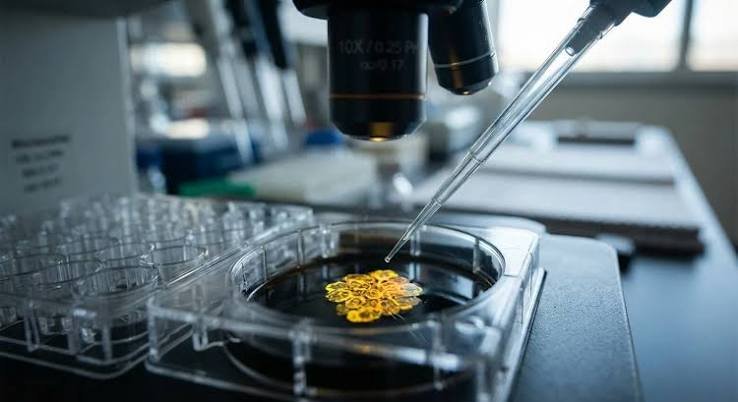
The PCTS platform enables the investigation of safety and therapeutic activity directly within viable, intact human tissue. By preserving the tissue architecture, the different resident cell populations remain in their native three-dimensional arrangement and maintain their cell-to-cell and cell-to-extracellular matrix interactions within the biological background of the donor. Therapeutic responses can therefore be studied in the same type of diseased human tissue that the therapy is intended to treat in patients.
The tissue we work with is obtained with full informed consent, and our clinical network gives us access to multiple organs across a range of disease stages, so therapies can be tested in genuine human disease. Every donor is different, and we see that as a strength. Donor-to-donor variation mirrors the heterogeneity of a clinical trial population, and we incorporate this into our studies by testing across multiple donors.
Studies using PCTS can provide human-relevant evidence around questions such as whether a target is functionally important, how candidate interventions compare with one another, which biomarkers could indicate efficacy in clinical trials, and whether a therapy is producing the intended target engagement or tissue-level response. Introducing this type of human-relevant evidence earlier in development can help strengthen confidence in a promising programme, but it can also identify weaknesses before an asset progresses unnecessarily, and both outcomes are valuable. The objective is to generate data that can support more confident development decisions.
A major challenge was maintaining intact human tissue in a viable and functional state for long enough to conduct meaningful, controlled studies. FibroFind’s proprietary bioreactor was developed to maintain viable human tissue under controlled physiological conditions for study periods of up to 10 days. The tissue is used without freeze-thawing, helping to preserve its native biology and functional characteristics throughout the study. Over that period, the bioreactor maintains the tissue’s architecture, active cellular signalling and disease phenotype. Ultimately, the technology allows therapies to be tested in a complex human biological system while retaining the experimental control that preclinical research depends on.
What are the biggest challenges currently facing preclinical research, and what opportunities do you see for improving the translation of promising science into successful clinical outcomes?
A standard preclinical development package today looks very different from one generated 20 years ago, and I expect this will continue to evolve rapidly as the industry increases its use of human-relevant models. One of the biggest challenges for biotech and pharmaceutical companies is selecting the right models and the right external partners to generate data they can genuinely stand behind. The purpose of a preclinical study should be to enable a confident development decision, and that does not mean producing only positive data or automatically progressing an asset.
If a robust human-relevant model indicates that a target or therapeutic is unlikely to succeed, developers need to be confident enough in those findings to deprioritise the programme and redirect resources towards something with a greater potential to benefit patients. Identifying risk earlier can help avoid committing further time and capital to an asset with a lower probability of translation, while giving development teams and investors stronger evidence to support funding and portfolio decisions. Companies need to be willing to adopt more relevant models earlier, to embrace the findings they generate and to give appropriate weight to human-relevant evidence when making progression decisions. The earlier that confidence is established, the easier it becomes to allocate resources towards the programmes with the strongest potential.
The FDA Modernization Act 2.0, signed in 2022, and the FDA’s 2025 roadmap for reducing animal testing, alongside equivalent initiatives in other regions, reflect a broader move towards enabling greater use of complex human models within preclinical development. If that shift leads to these approaches being incorporated more routinely into preclinical pipelines, it could help address one of the longstanding challenges in drug development. By interrogating human biology more effectively before entering the clinic, we have an opportunity to reduce the risk posed by the first translational gap.
How do you see advances in technologies such as AI, data analytics, and automation influencing the future of preclinical research and drug discovery?
AI and machine learning are creating enormous opportunities in early drug discovery by identifying a large number of novel therapeutic targets at a speed that previously seemed impossible. The challenge is that this explosion of targets creates a new bottleneck. Once hundreds of potential targets have been generated, how are they ranked, validated and triaged effectively?
To do so requires substantial time and resources to build an experimental programme around each therapeutic target. With hundreds of emerging candidates, it is not practical to validate every target through extensive conventional in-vitro and in-vivo experiments. Therefore, I think we will see a corresponding change in the way these targets are interrogated. In-silico approaches will play an important role, but there is also a strong opportunity for emerging higher-throughput human models such as PCTS to provide experimental validation much earlier.
Targets identified through AI or machine learning could be investigated using modalities such as siRNA to selectively silence a target and assess the resulting biological effects within systems including organ-on-chip models, PCTS or iPSC-derived organoids. This approach can provide an effective way to establish whether altering a particular target produces the desired biological effect before significant investment is made in chemistry and therapeutic development. I expect this will help drive a broader move away from conventional validation strategies towards more scalable, human-relevant preclinical platforms.
Looking ahead, what changes do you believe the life sciences industry should prioritise to accelerate the adoption of more predictive preclinical models and improve the success rate of new therapies?
Widely used in-vitro and in-vivo models do not fully represent human tissue, meaning substantial investment may already have been committed to an asset before its activity is tested in a more representative human tissue system. Discovering issues, such as safety signals or weaker-than-predicted efficacy, late in development is extremely costly, both financially and in terms of time. Introducing complex, human-relevant models much earlier in the preclinical pathway can help improve the success rate of new therapies. Some companies are already doing this, but adoption is not universal. To accelerate it, I think three things need to change.
First, human-relevant data needs to shape decisions rather than be added at the end. That means defining up front what a human tissue study needs to show for a programme to progress and agreeing in advance that a well-designed negative result is grounds to stop. Second, investors and boards should value an early, evidence-based ‘no’ as highly as a ‘yes’. Teams are rarely rewarded for stopping a programme, even when it saves years of spend. If funding conversations gave more weight to the quality of human evidence behind a decision, the incentives would shift. Third, the field needs more shared evidence on how well these models predict clinical outcomes. When developers, model providers and regulators publish where human tissue data has, and has not, anticipated clinical results, trust in these approaches will build quickly.
As more companies demonstrate the value of introducing human-relevant models earlier, I expect adoption to accelerate and PCTS to become a routine part of many preclinical portfolios.
References





© 2026 Biopharma Boardroom. All Rights Reserved.