04 November 2026 | Wednesday | News
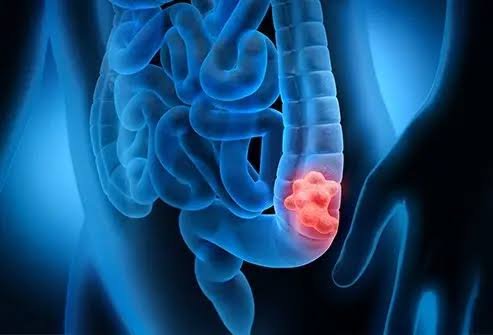
Image Source: Public Domain
In pMMR/MSS colon cancer, neoadjuvant BOT+BAL met the trial’s primary endpoint with a 36% major pathologic response rate, including 29% pathologic complete response, within an overall 71% pathologic response rate after one BOT dose and two BAL doses
No patients treated with BOT+BAL had their cancer return, with median follow-up of 19.2 months in MSS disease and 16.7 months in MSI-H disease; 12-month event-free survival was 100% in both combination cohorts.
Independent, multicenter UNICORN findings reinforce the NEST peer-reviewed neoadjuvant evidence supporting Agenus’ planned Phase 3 ROBBIN trial in curative-intent MSS/pMMR colon cancer
Agenus Inc. (Nasdaq: AGEN), a leader in immuno-oncology innovation, announced the peer-reviewed publication of results from the investigator-sponsored, multicenter Phase 2 UNICORN trial evaluating short-course preoperative, or neoadjuvant, botensilimab (BOT), Agenus’ multifunctional, Fc-enhanced anti-CTLA-4 antibody, alone or in combination with balstilimab (BAL), Agenus’ anti-PD-1 antibody, in patients with resectable, locally advanced colon cancer. The manuscript, titled “Preoperative botensilimab with or without balstilimab for patients with resectable, locally advanced pMMR or dMMR colon cancer: the UNICORN trial by GONO,” was published in Nature Medicine and is available at DOI 10.1038/s41591-026-04710-1.
The UNICORN trial enrolled 56 patients in four non-randomized cohorts of 14, evaluating BOT alone or BOT+BAL in mismatch repair proficient/microsatellite stable (pMMR/MSS) and mismatch repair deficient/microsatellite instability-high (dMMR/MSI-H) colon cancer. The study assessed pathologic response, event-free survival, circulating tumor DNA (ctDNA) and biological changes in tissue samples before and after treatment.
UNICORN clinical findings
Among the 14 patients with pMMR/MSS colon cancer treated with BOT+BAL, 36% achieved a major pathologic response (MPR), defined as 10% or less viable tumor remaining at surgery, and 29% achieved a pathologic complete response (pCR), meaning no viable tumor remained in the primary tumor or lymph nodes. Overall, 71% of patients had a pathologic response, defined as at least 50% tumor reduction.
For historical context, first-generation CTLA-4/PD-1 combination immunotherapy has demonstrated an MPR rate of approximately 20% while neoadjuvant chemotherapy has demonstrated an MPR rate of 8% in previously reported studies of pMMR colon canceri,ii.
In the separate pMMR/MSS BOT monotherapy cohort, 43% experienced partial tumor regression, but no patients achieved an MPR or pCR. The findings suggest BOT can initiate anti-tumor activity in a subset of pMMR tumors, while the deeper major and complete responses emerged with the addition of BAL and PD-1 blockade.
In dMMR/MSI-H disease, all 14 patients (100%) in the BOT+BAL treatment cohort achieved an MPR, including 13 (93%) with a pCR, compared with 36% and 29%, respectively, with BOT alone.
The responses with BOT+BAL were durable. At the February 9, 2026, data cutoff, no patients treated with BOT+BAL had their cancer return, with median follow-up of 19.2 months in pMMR/MSS disease and 16.7 months in dMMR/MSI-H disease. Twelve-month event-free survival was 100% in both combination cohorts.
Planned surgical timing was preserved in 98% of patients, and all 56 patients underwent surgical resection. One patient experienced a 10-day surgical delay associated with Grade 3 hyperthyroidism. Grade 3 or 4 immune-related adverse events occurred in 2% of patients.
Translational Findings
ctDNA clearance tracked with response: All five evaluable pMMR/MSS patients who achieved an MPR cleared ctDNA before surgery. No patients who achieved ctDNA clearance had their cancer return at the data cutoff.
Biological findings aligned with BOT's Fc-enhanced design: Paired tumor samples collected before treatment and at surgery identified immune changes associated with response that were consistent with BOT’s Fc-enhanced mechanism and its ability to remodel the tumor immune environment, including reductions in immunosuppressive regulatory T-cell signatures and increased immune-cell infiltration.
The UNICORN publication follows the recent peer-reviewed publication of the independent Phase 2 NEST study evaluating neoadjuvant BOT+BAL. With NEST and UNICORN now both peer reviewed, the two studies provide complementary and clinical evidence across single-center and multicenter settings, with consistent deep pathologic responses, ctDNA clearance, preserved surgical feasibility and maturing longer term follow-up. While the studies differed in design, the consistency of findings across independently conducted trials strengthens the clinical foundation for evaluating BOT+BAL earlier in the course of colon cancer.
This is particularly relevant in MSS colon cancer, which represents approximately 85% of early-stage colorectal cancers and has historically derived limited benefit from conventional immunotherapyiii,iv. In the curative-intent setting, treatment before surgery creates an opportunity to activate the immune system while the primary tumor and surrounding immune environment remain intact, with the goal of eliminating residual disease and preventing recurrence so that more patients may ultimately be cured.
“UNICORN delivers compelling, independent evidence that BOT+BAL can produce deep responses in MSS colon cancer, a disease historically resistant to conventional immunotherapy,” said Steven O’Day, M.D., Chief Medical Officer of Agenus. “With no recurrences observed to date, these findings reinforce the promise of treating earlier. Together with NEST, they provide a strong foundation for our planned Phase 3 ROBBIN trial and our ambition to change how MSS colon cancer is treated in the curative-intent setting.”
Agenus is advancing ROBBIN, the planned global randomized Phase 3 trial evaluating neoadjuvant BOT+BAL followed by standard of care versus standard of care alone in previously untreated patients with high-risk Stage II or Stage III MSS/pMMR colon cancer. Event-free survival is the planned primary endpoint.
“UNICORN gave us a rare opportunity to look beyond whether a tumor responded and examine what was changing biologically during a very short period before surgery,” said Filippo Ghelardi, M.D., first author and Medical Oncology Fellow of Department of Medical Oncology, Fondazione IRCCS Istituto Nazionale dei Tumori, Milan, Italy. “The alignment we observed between deep pathologic responses, clearance of circulating tumor DNA and changes within the tumor immune environment provides multiple signals of treatment activity. For MSS colon cancer, where immunotherapy has historically had limited impact, these findings give us important new insight into what may be possible when treatment is introduced earlier in the course of disease.”
“For many years, MSS colon cancer has largely been considered resistant to immunotherapy. The UNICORN study challenges that assumption in the curative-intent setting,” said Filippo Pietrantonio, M.D., senior author, study principal investigator and Head of the Gastrointestinal Oncology Unit, Fondazione IRCCS Istituto Nazionale dei Tumori, Milan, Italy. “The purpose of moving treatment earlier is not simply to shrink the tumor before surgery. It is to prevent the disease from returning and ultimately increase the number of patients who may be cured. Seeing deep responses after only a short course of treatment, with patients able to proceed to planned surgery and no recurrences observed to date in the combination cohorts, provides a strong rationale to test that objective in a larger randomized trial.”






© 2026 Biopharma Boardroom. All Rights Reserved.