By combining genomics, proteomics, and metabolomics, researchers are moving closer to causal insight in complex disease.
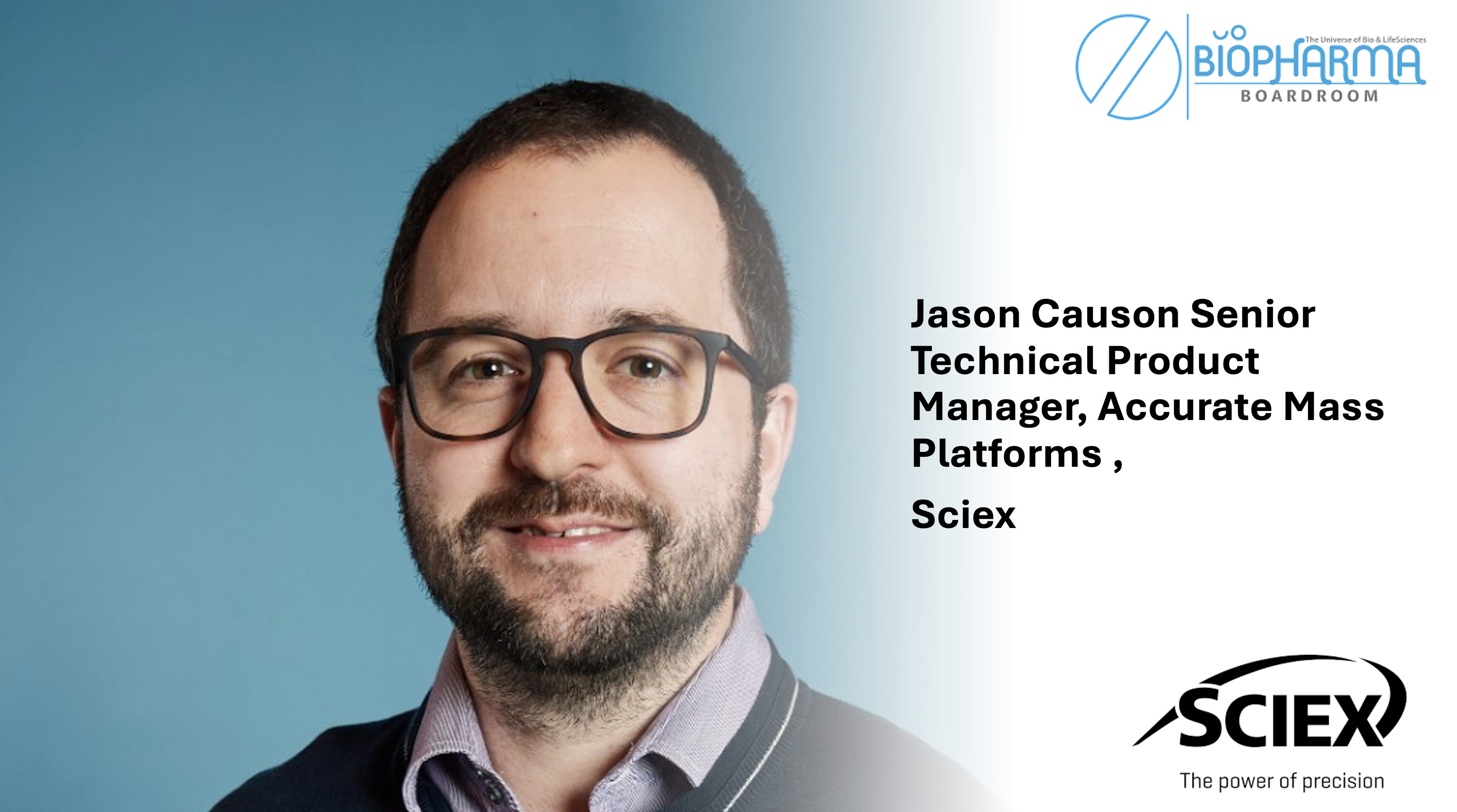
In this BioPharma Boardroom interview, Jason Causon, Senior Technical Product Manager for Accurate Mass Platforms at SCIEX, explores how multiomics is reshaping our understanding of complex diseases such as cancer and Alzheimer’s. He discusses why no single omics discipline can capture biological reality on its own, the technical and data-integration challenges facing the field, and how advances in analytics and AI are bringing the industry closer to causal, systems-level insights that could ultimately transform disease intervention and decision-making.
How is multiomics changing our understanding of complex diseases like cancer and Alzheimer’s?
As a field, we’re acknowledging what biology has always shown us: complex diseases aren’t driven by single pathways but by overlapping systems responding to both internal biology and external environmental forces. No individual omics discipline—genomics, proteomics, metabolomics, exposomics, lipidomics—can capture that full complexity alone. Multiomics “lenses” build a more complete picture of how diseases like cancer and Alzheimer’s actually emerge and progress.
What’s transformative is the shift from symptom‑level insights to root‑cause understanding. As data combines across disciplines, it’s uncovering relationships—for example, how specific bacterial, viral, or environmental pollutants may initiate disease pathways.
What are the biggest challenges in integrating genomic, proteomic, and metabolomic data?
The biggest challenge I’ve seen is the sheer scale and heterogeneity of the data. Every omics layer carries its own complexity, its own analytical pipeline, and its own biases. And each of them captures a static snapshot of biology – when the sample is collected. Integrating those snapshots into a meaningful, dynamic understanding of biological systems is extraordinarily difficult. When you consider that the metabolome pathway maps are large enough to cover entire walls, it’s amazing to think that we are still detecting only a fraction of its components.
On top of that, data is generated across institutions, across populations, and across time. Even the best datasets are hard to stitch together cleanly. This is where AI and machine learning hold enormous promise, because these tools excel at finding trends buried in massive, noisy datasets.
How soon could multiomics meaningfully influence decision-making?
Multiomics research in the future could help us trace biological causality with far more clarity. It could open the door to interventions that address the drivers of disease rather than downstream effects. Progress will be gradual rather than instantaneous. What gives me confidence is the momentum we’re seeing inside large labs that may have decades of archived samples and data. Revisiting those though a multiomics lens could uncover insights that simply weren’t possible when those samples were first collected.