25 December 2025 | Thursday | Interaction
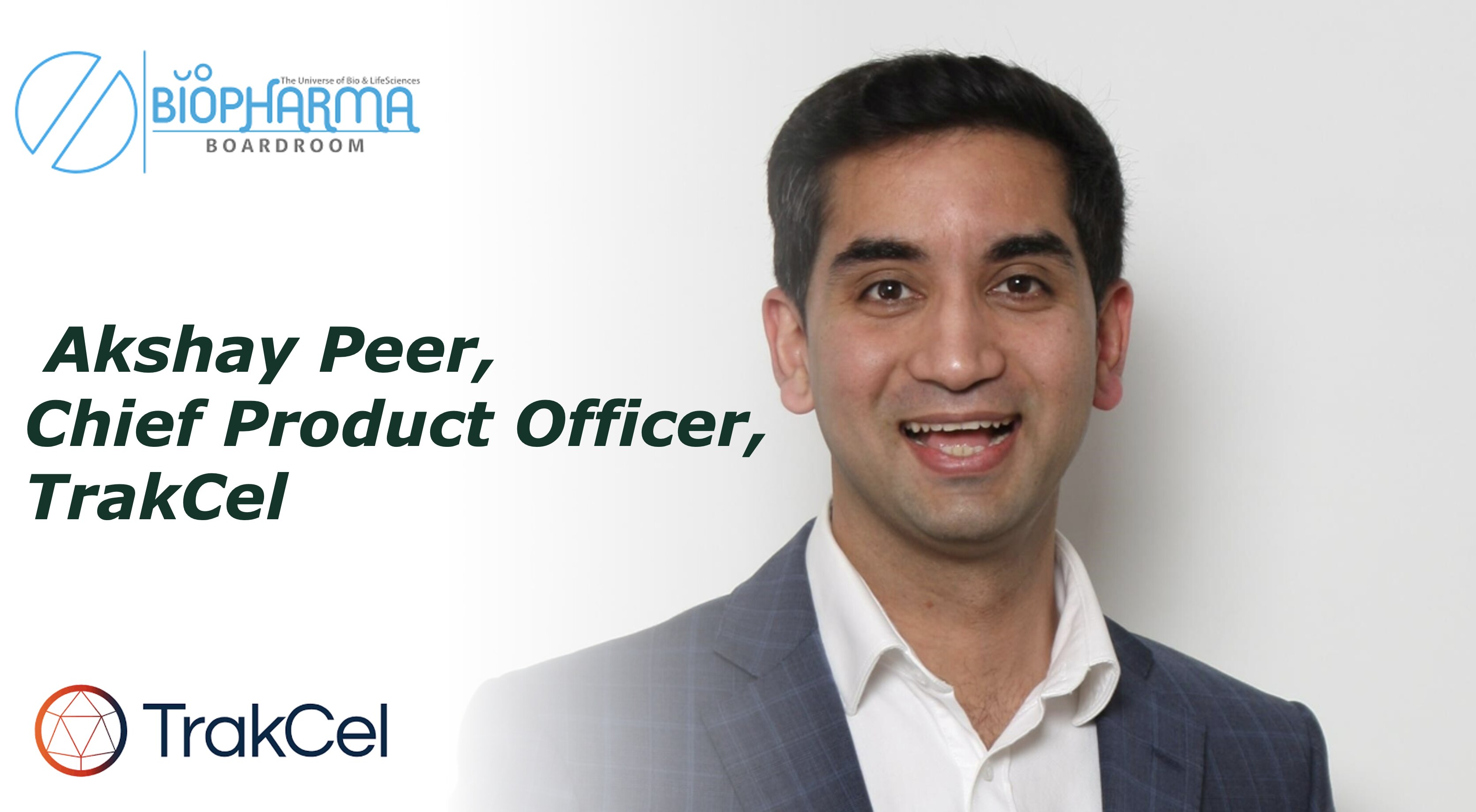
As cell and gene therapies move rapidly from pioneering clinical trials into commercial healthcare systems the industry is facing a defining inflection point. Fragmented workflows portal fatigue and inconsistent digital foundations are emerging as barriers to scale precisely when reliability speed and compliance matter most. In this BioPharma Boardroom Q&A Akshay Peer Chief Product Officer at TrakCel shares a clear eyed view of the evolving CGT landscape exploring how orchestration platforms must mature to support commercial delivery regulatory readiness and equitable patient access worldwide.
How do you see the current CGT landscape evolving as more therapies progress from clinical trial to commercial approval, and what are the biggest orchestration challenges that stand out today?
As more cell and gene therapies (CGTs) transition from clinical stages into full commercial delivery, the sector is confronting long-standing orchestration challenges. In the past, early-stage programs were often supported by bespoke, highly manual orchestration methods, a result of pioneering work in a novel field. However, as approvals increase and patient volumes grow, these fragmented digital infrastructures are creating significant scale-up obstacles. Many treatment centers now juggle multiple portals with inconsistent terminology, process steps and data formats, creating structural inefficiencies commonly referred to as “portal fatigue.” This inconsistency translates directly into clinical burden, training complexity and increased risk of workflow errors, particularly in high-pressure environments where timing and chain-of-identity management are non-negotiable.
Commercialization also amplifies the portal fatigue challenge as a single therapy may depend on hospitals, community clinics, logistics providers, outsourcing partners, payers and distributors all working in harmony. Maintaining point-to-point connections across this expanding network becomes unsustainable. As more therapies enter the market, the lack of standardization threatens to bottleneck patient access and slow broader industry progress.
At the same time, the regulatory environment is also shifting. Agencies like the FDA are expecting a surge in CGT submissions, and companies must ensure that their operational and digital foundations can support regulatory expectations around visibility, traceability and compliance readiness.
The biggest challenges emerging today include inconsistent digital experiences at treatment centers, rising clinical workload, fragmented data flows and the absence of a unified orchestration framework that can reliably support multi-site, global delivery. Addressing these issues will be essential for enabling equitable patient access as CGTs move into broader commercial use.
What limitations do existing orchestration platforms face when moving from trial-based workflows into the realities of large-scale, commercial delivery across diverse care models?
Many orchestration platforms used in early trials were built around product-specific processes and narrowly scoped integrations. As a result, they struggle to adapt when therapies shift into commercial environments with an increased number of diverse patient populations spread across different geographies. Trial-focused platforms often lack standardization across workflows and data structures, meaning each new therapy or site introduces additional customization. This increases operational complexity and perpetuates the fragmented digital landscape that has become a defining challenge for the sector.
Bespoke systems also tend to fall short in user-experience design. Clinical teams frequently encounter inconsistent interfaces and navigation patterns that differ from therapy to therapy, contributing to cognitive overload and increased training time. Staffing, infrastructure and digital maturity can vary significantly in community and outpatient settings, leading to an even higher barrier to adoption.
Trial-era systems were not designed to support seamless, bi-directional data exchange across electronic health records (EHRs), logistics platforms, outsourcing partners, payers and enterprise systems. As commercial networks expand, the lack of open, well-supported interfaces forces organizations into continuous, costly integration projects. This incompatibility can delay patient scheduling, material release and end-to-end visibility, which are critical in time-sensitive CGT workflows.
Additionally, many legacy solutions lack the configurability required to keep pace with evolving clinical protocols, regulatory expectations and new therapy modalities. Without modular architecture or a clear roadmap for future innovation, these systems become a bottleneck rather than an enabler of commercial scale.
Collectively, these limitations underscore why the industry is shifting toward standardized, interoperable orchestration platforms built for commercial realities rather than bespoke trial support.
With the FDA and other regulators seeking to accelerate CGT approvals, how can orchestration platforms align with these objectives and help companies navigate the compliance landscape more efficiently?
As growing numbers of CGTs progress through the development pipeline, regulators worldwide are preparing for an increasing number of CGT approvals in the coming years. This creates both greater opportunity and heightened operational pressure for developers. Digital orchestration platforms can play a central role in supporting this regulatory agenda by embedding compliance-ready capabilities directly into core workflows.
One of the most important contributions is standardization. By replacing bespoke processes with uniform workflows, data structures and documentation frameworks, platforms can reduce ambiguity and improve auditability across diverse sites and partners. Standardization also ensures consistent chain-of-identity and chain-of-custody management, which are areas of particular regulatory emphasis.
Regulators are also increasingly expecting real-time visibility across the end-to-end supply chain. Commercial-scale orchestration platforms can meet this expectation through interoperable integrations that centralize data across collection centers, manufacturers, couriers, depots and treatment sites. This level of transparency not only enhances patient safety but also reduces the burden of compliance reporting and documentation during inspections.
Additionally, integrated quality frameworks are becoming foundational expectations. Platforms that build these standards into their architecture allow organizations to demonstrate compliance more easily and respond quickly to evolving regulatory requirements.
Workflow configurability is another key enabler. As the FDA accelerates pathways and updates guidance, developers need the ability to modify orchestration processes without large-scale redevelopment. Flexible, modular platforms can adapt rapidly while preserving validated state, reducing requalification work.
Platforms that promote standardization, interoperability, transparency and built-in regulatory rigor will be best positioned to support accelerated CGT approvals and efficient global compliance at scale
In geographies with lower digital maturity, what barriers persist, and how do you see technologies like AI transforming scheduling, planning, and accessibility for outpatient and community-based settings?
In regions where healthcare digitalization is uneven, CGT delivery faces several additional barriers. Treatment centers may have limited interoperability between systems, inconsistent access to secure digital infrastructure or fragmented workflows that depend heavily on manual processes. These challenges amplify orchestration risks across complex CGT supply chains, particularly when managing tightly timed logistics and temperature-sensitive materials. They also heighten the burden on clinicians who must navigate multiple portals with varying levels of usability, a problem already well documented in more digitally mature markets.
Artificial intelligence (AI)-driven capabilities are emerging as a powerful solution. Predictive scheduling tools can anticipate slot availability, manufacturing capacity and logistical constraints, reducing back-and-forth communication and accelerating patient onboarding. These tools have the potential to enable prescribers to preview available appointment windows before entering full patient data, reducing administrative burden and simplifying decision-making.
AI can also help optimize courier routing, anticipate delays and adjust plans to protect chain-of-identity and timing requirements. In these regions, AI-driven automation reduces reliance on manual coordination and mitigates risks associated with inconsistently trained staff or low resource availability.
Over time, AI-enabled orchestration can help with decision support and process standardization even in settings without sophisticated digital ecosystems. By embedding intelligent workflows that guide users step by step, platforms can reduce cognitive load on teams and make community-based CGT delivery more practical, predictable and scalable.
To what extent can standardization be embedded early in CGT processes, while still allowing for flexibility across different therapy types and patient journeys?
Standardization in CGT development means establishing a common operational language with shared data fields, baseline workflow stages and interoperable integration patterns, before individual therapy requirements begin to diverge. Putting these foundational elements in place early gives organizations a stable foundation on which more complex, therapy-specific features can be built. It also reduces unnecessary variation that contributes to clinical burden and the well-documented issue of portal fatigue at treatment centres.
However, standardization does not mean designing processes that ignore the diversity of CGT modalities. Autologous, allogeneic and gene-edited products can differ dramatically in timing, risk profiles, chain-of-custody requirements and patient management pathways. For this reason, the most effective approach is one that pairs a structured, repeatable core with modular flexibility. Emerging blueprint-style workflow templates demonstrate this in action. They can offer a consistent baseline while allowing manufacturers and sites to layer on conditional steps, specialized approvals or therapy-specific rules without rewriting entire processes.
Embedding standardization early can also strengthen data integrity. When foundational data models are aligned across programs, integrations with EHRs, logistics providers, outsourcing partners and quality systems become far easier to scale. This reduces the reliance on costly bespoke interfaces later and helps improve efficiency as companies move toward commercial delivery.
For clinical teams, the impact is equally important as a predictable digital experience across therapies reduces training time, minimizes cognitive load and gives staff confidence as new programs are introduced. Regulators also benefit from clearer traceability and more uniform documentation.
Looking ahead five years, what will a truly fit-for-purpose CGT orchestration platform look like, and how will it change the way life-saving therapies reach patients globally?
Five years from now, CGT orchestration will look fundamentally different from the portal fatigue of today. As commercial pipelines expand, the field will require platforms that serve less as software tools and more as intelligent, continuously learning infrastructure for global therapy delivery.
The defining characteristic of next-generation platforms will be unification. Instead of multiple logins and inconsistent user experiences, healthcare providers will access a single, secure gateway that consolidates all relevant workflows across therapies. Early movement toward consolidated access hints at this trajectory today. This will give clinicians a frictionless, predictable environment regardless of therapy modality, site type or geographic location.
These platforms will also be AI-native. Predictive models will further optimize scheduling, forecast manufacturing slots, identify potential logistics disruptions before they occur and guide users through complex decision points in real time. AI will function as an orchestration co-pilot, expanding the capacity of centers with lower digital maturity and enabling outpatient and community clinics to safely participate in CGT delivery at scale.
On the operations side, highly modular workflow blueprints will replace bespoke configurations. New therapies, new regions and new care models will be onboarded through configurable components rather than ground-up development, which can dramatically accelerate launch timelines while preserving validated processes. This shift reflects the industry’s growing recognition that standardization is a prerequisite for global expansion.
The next five years will redefine orchestration as an intelligent, scalable and globally connected backbone for CGT delivery that can shorten the distance between innovation and the patients who depend on it.




© 2026 Biopharma Boardroom. All Rights Reserved.