02 February 2026 | Monday | News
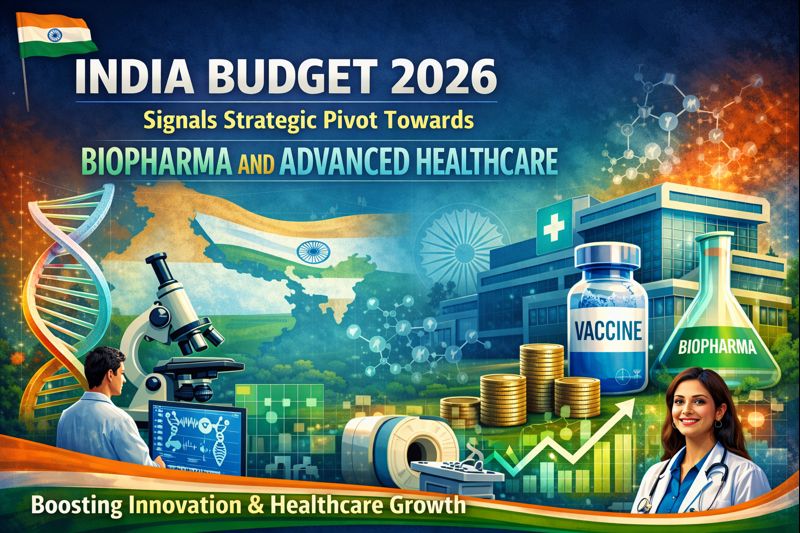
With the launch of a ₹10,000 crore multi year Biopharma Shakti programme, the government has laid the groundwork for strengthening India’s capabilities in biologics, biosimilars, vaccines, and complex therapeutics, while simultaneously addressing regulatory, infrastructure, and talent gaps that have constrained growth in advanced biopharma.
For industry leaders, Budget 2026 represents one of the most structured life sciences interventions in recent years, aimed at long term competitiveness rather than short term incentives.
At the centre of the Budget is the Biopharma Shakti initiative, with funding spread over five years to support manufacturing scale up, research infrastructure, and clinical development capacity.
Key elements include the expansion and modernisation of pharmaceutical education and research institutions, creation of a national network of accredited clinical trial sites, and targeted investment in biologics and biosimilar production capabilities.
The initiative signals a deliberate move to position India as a preferred global hub for complex biologics manufacturing and development, aligning domestic capacity with global demand trends in immunology, oncology, metabolic disorders, and vaccines.
Budget 2026 places strong emphasis on strengthening the Central Drugs Standard Control Organisation, with the stated objective of aligning regulatory processes with global best practices.
For biopharma companies, this focus on regulatory modernisation is expected to translate into more predictable approval timelines, improved scientific review processes, and enhanced credibility of India as a destination for global clinical research and product development.
Industry stakeholders view regulatory reform as a critical enabler for attracting higher value partnerships, particularly in biologics and advanced therapies.
Beyond manufacturing and innovation, the Budget also addresses structural gaps in healthcare delivery. Measures include the development of regional medical tourism hubs, expansion of speciality healthcare institutions, and large scale training programmes for allied healthcare professionals.
The government also reiterated its intent to improve affordability and access to medicines for chronic diseases, reflecting recognition of India’s rising non communicable disease burden.
For healthcare providers and pharmaceutical companies alike, these initiatives point towards sustained demand growth across diagnostics, speciality drugs, and integrated care models.
While the Budget stops short of introducing fresh tax incentives for research and development, the scale and clarity of the Biopharma Shakti roadmap has been viewed positively by industry and capital markets.
The focus on long term capacity building, regulatory certainty, and ecosystem development is seen as a signal of policy stability, which is critical for capital intensive biopharma investments.
Execution, however, will remain the defining factor. Industry leaders will closely watch timelines, fund deployment mechanisms, and coordination between central and state agencies as the programme moves from announcement to implementation.
India Budget 2026 marks a strategic inflection point for the country’s biopharma and healthcare sectors. By prioritising biologics, regulatory reform, and advanced healthcare infrastructure, the government has set a clear direction for the next decade.
For biopharma boardrooms, the message is unambiguous: India is positioning itself for higher value participation in the global life sciences economy, and companies aligned with innovation, quality, and scale stand to benefit most from the policy shift.




© 2026 Biopharma Boardroom. All Rights Reserved.