Hantavirus Infection has once again entered public health discussions as global health experts intensify surveillance of zoonotic diseases linked to environmental disruption, urbanisation, climate variability, and rising human interaction with rodent populations.
Although hantavirus infections remain relatively uncommon compared to influenza, dengue, or COVID related illnesses, medical experts warn that the disease carries a disproportionately high clinical risk because of its ability to progress rapidly from mild flu like symptoms to severe respiratory or renal complications.
Public health authorities across Asia, Europe, and the Americas are increasingly emphasising the importance of awareness, prevention, environmental hygiene, and early medical intervention as essential tools in reducing the risk of outbreaks and severe outcomes.
What Exactly Is Hantavirus?
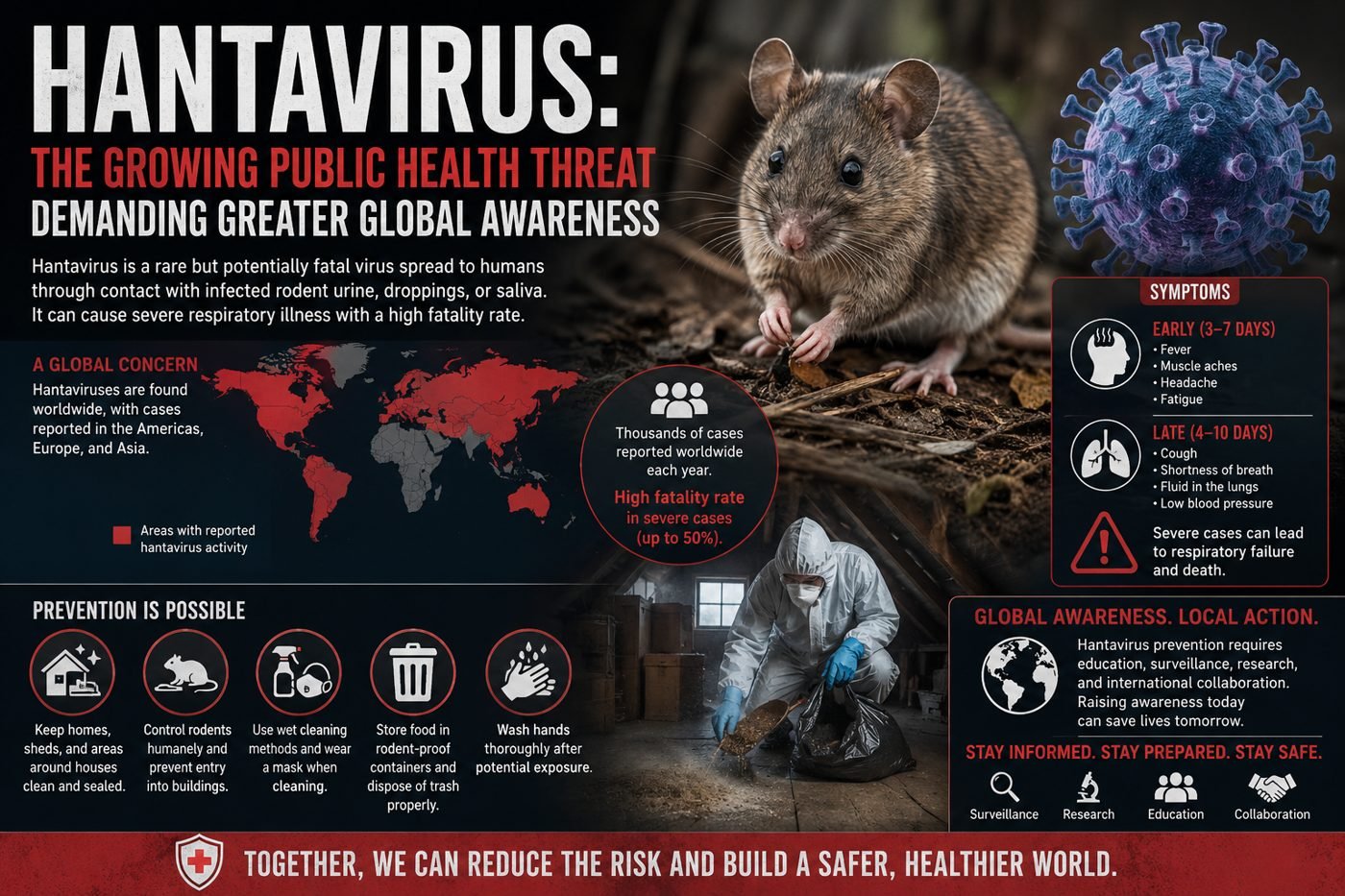
Hantavirus is not a single virus, but rather a family of viruses carried primarily by rodents. Different strains exist across different parts of the world, with varying clinical effects on humans.
The virus naturally circulates among rodent populations without causing significant illness in the animals themselves. Humans become accidental hosts when exposed to infected rodent urine, droppings, saliva, or contaminated dust particles.
The virus is most commonly transmitted through:
- Inhalation of airborne particles contaminated by rodent waste
- Direct contact with contaminated surfaces
- Touching the mouth, nose, or eyes after exposure
- Rodent bites in rare situations
Unlike many highly contagious respiratory viruses, hantavirus does not usually spread easily from person to person. Most cases originate from environmental exposure.
Why Hantavirus Is Receiving Increased Attention
Global health researchers increasingly view zoonotic diseases as one of the defining public health challenges of the modern era.
Several interconnected trends are contributing to heightened concern around hantavirus and other rodent borne illnesses:
Expanding Urbanisation
Rapid urban growth often leads to:
- Improper waste management
- Overcrowded housing
- Construction activity disturbing rodent habitats
- Increased rodent migration into human settlements
These conditions create environments where rodent populations thrive close to human communities.
Climate And Environmental Changes
Flooding, rising temperatures, changing rainfall patterns, and ecosystem disruption can alter rodent breeding cycles and population movement.
Health experts note that environmental instability frequently changes how rodents interact with agricultural zones, warehouses, food supply chains, and residential areas.
Increased Human Exposure
People working in:
- Farming
- Warehousing
- Construction
- Forestry
- Waste management
- Military operations
- Rural tourism
may face elevated exposure risks due to frequent interaction with enclosed, dusty, or rodent prone environments.
Understanding The Different Forms Of Hantavirus Disease
Hantavirus Pulmonary Syndrome (HPS)
Predominantly identified in North and South America, HPS primarily affects the respiratory system.
The condition can escalate rapidly, sometimes within hours, leading to:
- Severe breathing difficulty
- Fluid accumulation in the lungs
- Low oxygen levels
- Cardiovascular instability
HPS carries a high mortality rate if not recognised and treated early.
Hemorrhagic Fever With Renal Syndrome (HFRS)
More common in Asia and parts of Europe, HFRS affects blood vessels and kidney function.
Symptoms may range from mild illness to severe complications including:
- Kidney injury
- Internal bleeding tendencies
- Low blood pressure
- Shock in advanced cases
Several hantavirus strains associated with HFRS have historically been reported in parts of China, Korea, and Eastern Europe.
Early Symptoms Often Mimic Common Viral Illnesses
One of the biggest public health challenges associated with hantavirus is that the early symptoms can resemble routine viral infections.
Initial symptoms often include:
- Fever
- Muscle aches
- Fatigue
- Headache
- Nausea
- Chills
- Vomiting
- Abdominal discomfort
Because these symptoms overlap with influenza, dengue, COVID related illness, and seasonal infections, patients may delay seeking medical attention.
As the disease progresses, warning signs may include:
- Persistent cough
- Chest tightness
- Rapid breathing
- Severe weakness
- Reduced urine output
- Sudden drop in blood pressure
Medical experts stress that individuals with recent rodent exposure should immediately inform healthcare providers if such symptoms develop.
The Role Of Rodents In Disease Transmission
Rodents are among the most adaptable mammals globally and are capable of surviving across urban, agricultural, and industrial environments.
Common high risk environments include:
- Abandoned buildings
- Storage warehouses
- Grain facilities
- Basements
- Garages
- Rural cabins
- Construction sites
- Areas with accumulated garbage
Rodents contaminate surfaces through urine and droppings, and virus particles can remain infectious for a period depending on environmental conditions.
Cleaning contaminated areas improperly may increase airborne exposure risk.
Public Health Experts Warn Against Unsafe Cleaning Practices
One of the most overlooked risk factors involves cleaning rodent infested spaces without proper precautions.
Health authorities strongly advise against:
- Dry sweeping rodent droppings
- Using regular vacuum cleaners on contaminated areas
- Handling rodent nests without protection
Recommended safety measures include:
- Ventilating closed spaces before entering
- Wearing gloves and masks
- Spraying disinfectant before cleaning
- Using disposable cleaning materials
- Properly sealing and disposing contaminated waste
These precautions significantly reduce airborne transmission risk.
Is There A Cure Or Vaccine?
Currently, there is no universally approved antiviral cure specifically targeting all forms of hantavirus infection.
Treatment focuses primarily on supportive medical care, including:
- Oxygen therapy
- Intensive care monitoring
- Fluid management
- Respiratory support
- Kidney support in severe HFRS cases
Early diagnosis remains one of the most critical factors influencing survival and recovery outcomes.
Some countries have explored vaccine development for specific strains, particularly in regions where HFRS is more common, but widespread global vaccination strategies are not currently available.
Why Asia Pacific Regions Must Remain Vigilant
Asia Pacific countries face unique risk dynamics due to:
- High population density
- Rapid infrastructure expansion
- Tropical climate conditions
- Agricultural dependence
- Urban waste management pressures
Public health systems across the region are increasingly prioritising:
- Disease surveillance
- Rodent control programmes
- Community education
- Environmental sanitation
- Early warning systems
Experts believe integrated public awareness campaigns are essential to preventing isolated infections from escalating into broader public health concerns.
The Larger Global Health Lesson
Hantavirus represents more than an isolated infectious disease concern. It reflects the broader challenge of how environmental disruption, urban growth, biodiversity imbalance, and public sanitation intersect with human health.
Global health agencies increasingly recognise that future outbreak preparedness cannot rely solely on hospital systems. Community education, preventive behaviour, environmental management, and rapid public communication are becoming equally important pillars of disease control.
The growing attention around hantavirus serves as a reminder that even relatively rare diseases can become serious threats when awareness remains low.
In an increasingly interconnected world, experts argue that public vigilance, scientific surveillance, and environmental responsibility must evolve together to strengthen resilience against emerging zoonotic diseases.