23 June 2026 | Tuesday | News | By editor@biopharmaboardroom.com
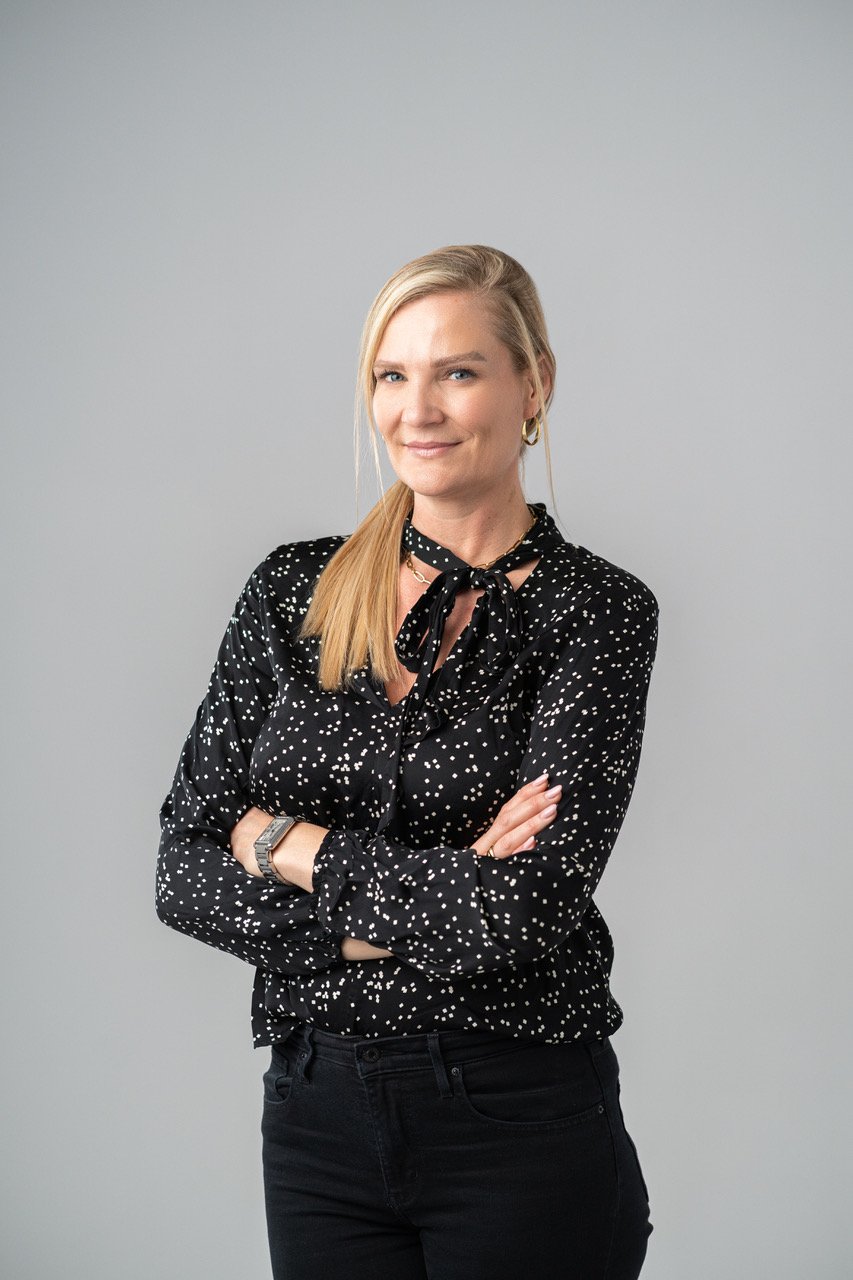
As biotech innovators pursue increasingly complex therapies, the path from discovery to clinical proof of concept is becoming more challenging than ever. From solubility limitations and formulation hurdles to funding constraints and regulatory demands, early development requires a careful balance of scientific rigor, speed, and strategic decision-making. During BIO 2026 in San Diego, BioPharma Boardroom spoke with Henny Zijlstra, Chief Commercial Officer at Ardena, about how the company is helping emerging and mid-sized biotechs navigate these challenges. Drawing on expertise in formulation development, nanomedicine, bioanalytics, and advanced drug delivery, Ardena is focused on transforming promising molecules into viable clinical candidates while reducing risk, conserving capital, and accelerating the journey toward patient impact.
Most biotech companies arrive at early-phase development with a promising molecule but significant unknowns. How does Ardena approach that challenge?
That is exactly the situation we are built for.
A promising molecule at the start of development is rarely a straightforward one. It may have solubility limitations, complex solid-state behaviour, absorption challenges, or formulation constraints that are not yet fully understood. The science is uncertain, the timeline is tight, and the decisions made in early phase will shape everything that follows - from clinical design to regulatory strategy to the eventual product profile.
Ardena's approach starts with understanding the molecule deeply. Our solid-state chemistry and preformulation expertise allow us to characterise the physical and chemical properties that will govern how a drug behaves in the body. That understanding then directly drives formulation strategy.
For many molecules - particularly those with poor solubility or complex absorption profiles - conventional formulation approaches are not enough. This is where our nanomedicine capabilities become critical. Lipid-based drug delivery systems, nanoparticle technologies, and other advanced enabling platforms allow us to engineer bioavailability into a molecule that would otherwise struggle to reach therapeutic levels in the clinic. These are not niche solutions. For a growing proportion of the pipeline that biotech companies are advancing today, they are the difference between a program that works and one that stalls.
What closes the loop is our bioanalytical capability. Formulation decisions need to be validated by data - what is the drug actually doing in vivo? Our bioanalytical labs provide the PK and quantitative measurement that tells clients whether their strategy is working and where it needs to evolve. The connection between formulation science, nanomedicine expertise, and bioanalytical measurement is where real insight is generated in early phase.
What makes this meaningful for biotech clients is the continuity of thinking across all these disciplines. Assumptions are not lost between workstreams. Data generates decisions, not just reports.
Early-phase development is where the most consequential trade-offs are made, often with the least data. Ardena's role is to bring rigour, speed, and integrated scientific judgment to that window - so that clients reach first-in-human, and the decisions beyond it, with confidence.
What therapeutic areas are currently driving the most demand across your development services?
Demand is strongest where therapies are becoming more targeted, technically complex, and difficult to develop through standard platforms.
Oncology remains a major driver. Many oncology programs involve potent compounds, challenging solubility profiles, accelerated timelines, and pressure to reach clinical proof of concept efficiently. We also see strong demand in rare diseases, where small patient populations make speed, precision, and robust development strategies especially important.
There is also growing activity around advanced and precision medicine approaches, including oligonucleotides, peptides, complex injectables, and nanomedicine-based therapies. These programs often require specialist formulation expertise, advanced analytical capabilities, and a deep understanding of CMC complexity from early development onwards.
Across these areas, the common theme is complexity. Clients are not simply looking for capacity. They are looking for scientific judgement. They need partners who can solve formulation challenges, design fit-for-purpose processes, build defensible analytical packages, and support regulatory progress.
How is Ardena leveraging AI, data analytics, or digitalization to accelerate formulation and development timelines?
We see digitalization as a practical development tool, not a slogan.
In formulation and development, speed comes from making better decisions earlier. That requires high-quality data, structured workflows, and the ability to compare results across experiments, methods, materials, and process parameters. Ardena is focused on using digital tools to strengthen that decision-making process.
Data analytics can help teams identify patterns in formulation performance, solubility behaviour, stability trends, and process robustness. Digital systems also support better knowledge capture across sites and functions, reducing the risk that valuable development insight is lost between project stages.
AI has clear potential, particularly in areas such as experiment planning, predictive modelling, document preparation, and trend analysis. But we are deliberately pragmatic. In regulated development, AI must support scientific judgement, not replace it. The output still needs to be interpretable, validated, and aligned with CMC and regulatory expectations.
The real opportunity is combining specialist scientific expertise with better digital infrastructure. That is how timelines improve: fewer blind alleys, faster interpretation, and more confident technical decisions.
Small and mid-sized biotechs continue to face funding pressure. How is Ardena helping these companies advance programs more efficiently?
Funding pressure changes the development conversation. Biotechs cannot afford unnecessary work, avoidable delays, or strategies that look good on paper but do not support the next value inflection point - whether that is a Series B, a Phase 1 readout, or a partnering conversation.
At Ardena, we start by understanding where a program needs to get to, and by when. That context shapes everything. Development plans are designed to be technically sound and regulatory-aware, but also staged to what the program actually needs right now. Not every program needs a full ICH stability package or a definitive formulation before entering the clinic. Knowing when to build and when to hold is part of what experienced development partners bring.
For early-stage programs especially, one of the most valuable things Ardena can do is help clients see around corners. Identifying a formulation challenge, an analytical gap, or a manufacturing scalability issue before it becomes a clinical supply problem or a regulatory query is where experienced development partners earn their place. Catching those issues early -when options are still open and costs are low- protects both timeline and budget far more effectively than optimizing execution after the wrong decisions have already been made.
Flexibility matters too. Programs change as data comes in. Ardena is structured to adapt scope, scale, and pace with the program, so clients are not locked into a development plan that no longer reflects their situation.
Efficiency in drug development is not about doing less. It is about making the right technical choices at the right time, with enough foresight to avoid the expensive corrections that come from moving too fast in the wrong direction - or too slowly when the window matters.
What trends at BIO 2026 are most influencing your strategic priorities moving forward?
The themes running through BIO 2026 - complex medicines, rare disease programs, biotech financing pressure, regulatory evolution - are not new to Ardena. They describe the exact environment our scientists work in every day.
What they point to collectively is a sharper need for development partners who can do more than manufacture. Biotechs are bringing molecules that are harder to formulate, harder to characterize, and harder to get through regulatory review. Their timelines are tighter. Their capital is finite. They need partners who already know the problems before they arrive.
That is where Ardena is built to operate. We solve the development challenges other CDMOs avoid -complex solid-state chemistry, nanomedicines, HPAPIs, sterile dosage forms, targeted therapies. Not because we cover a broad service list, but because our scientists have worked through these problems before and know where the risk sits.
The trend that matters most to us is not a headline. It is the gap between promising science and development reality - and how much value gets lost in that space when the wrong decisions get made too early, or the right ones get made too late. That is the problem we are focused on.
Your timeline is our problem. Our scientists already have a plan.



© 2026 Biopharma Boardroom. All Rights Reserved.