03 August 2026 | Monday | Interaction
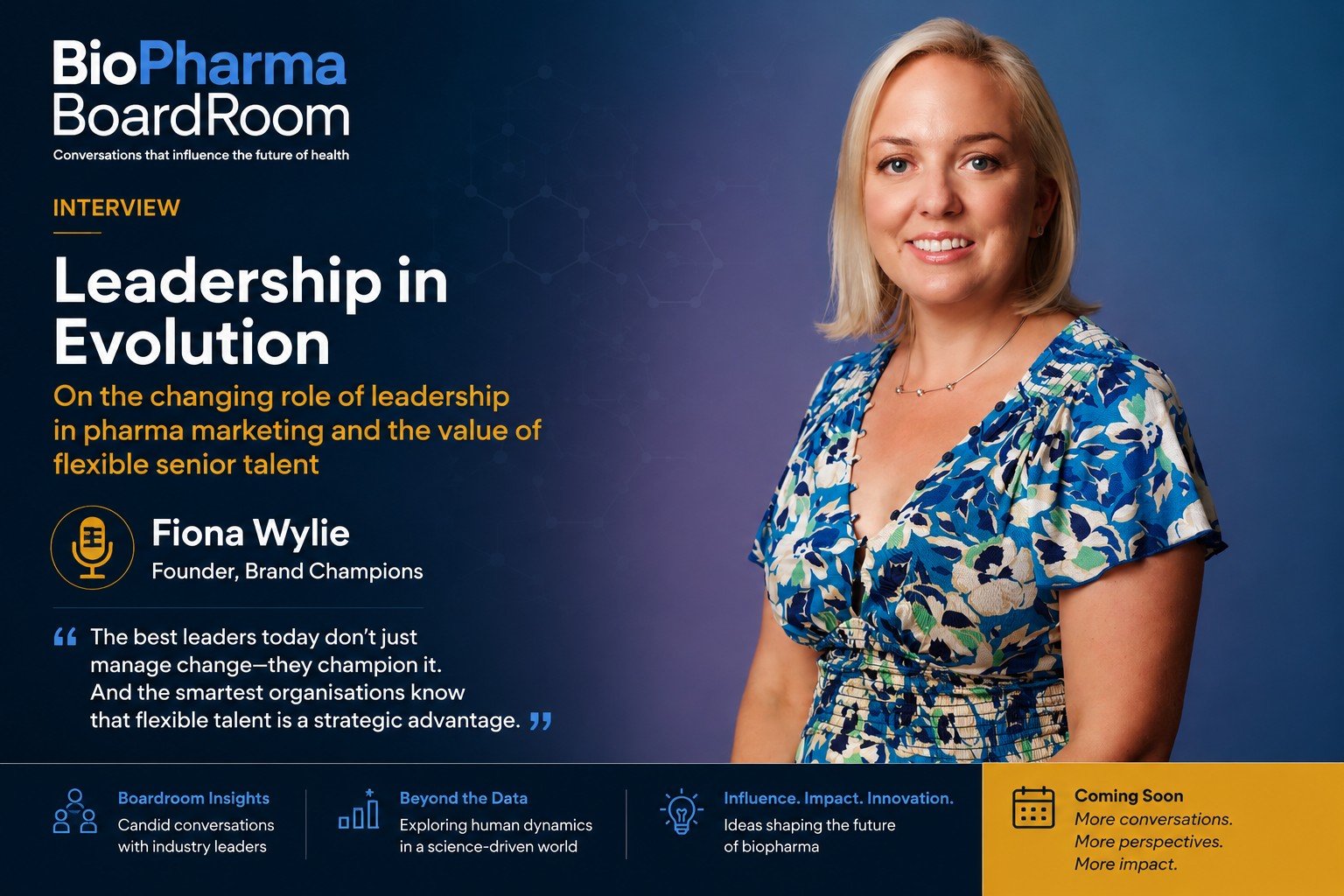
Pharmaceutical marketing is undergoing a significant transformation as companies balance regulatory complexity, digital disruption, evolving workforce expectations and the need for more agile ways of working. Building high-performing teams now requires a shift from traditional structures towards models built on trust, flexibility and specialised expertise.
In this interview with BioPharma BoardRoom, Fiona Wylie, Founder of Brand Champions, discusses the changing role of leadership in pharma marketing, the value of flexible senior talent, the opportunities and challenges of building a specialist consultancy, and how AI is redefining skills, creativity and decision-making across the industry. Drawing on more than 20 years of experience with organisations including Pfizer, Nestlé and British Airways, Fiona shares insights into creating marketing teams that can adapt, innovate and deliver impact in a highly regulated environment.
You founded Brand Champions after identifying a gap in flexible senior marketing support. What leadership lessons from that journey continue to shape your business today?
I founded Brand Champions after seeing that both businesses and experienced marketers were being let down. Businesses needed access to senior marketing expertise, while many brilliant marketers, including parents and caregivers, wanted to work differently and more flexibly.
One of the main lessons I learned is that trust scales. When you give experienced people real responsibility and the flexibility to deliver in a way that fits their lives, they produce strong results. That principle still shapes the business today. We are remote-first, hire experienced people and judge work on results rather than visibility. We have had zero staff turnover and an 87% client retention rate.
I have also learned that founders must stay close to their clients, which is why as a founder, I still personally take part in client conversations every week.
The pharmaceutical industry is evolving rapidly. How do you see leadership and workforce expectations changing within pharma marketing teams?
Pharma marketing teams are under pressure to move faster with fewer people, and that is changing what leadership looks like. We are seeing a shift away from large, rigid in-house teams towards leaner core teams supported by flexible senior specialists.
At the same time, experienced pharma marketers increasingly expect autonomy, purpose and flexibility, and they will leave organisations that cannot offer those things. Leaders who focus on visibility rather than results risk losing their best people. The strongest teams will combine the rigour required in a regulated environment with the trust that modern employees expect. That combination is still rarer than it should be.
What are the biggest challenges pharmaceutical companies face when balancing regulatory compliance with creativity and effective brand communication?
One of the biggest challenges is when regulatory review only happens at the end of the creative process. This can water down the work, extend timelines and leave teams feeling demoralised. Compliance colleagues should be involved from the first briefing so that teams can design within the rules from the beginning. The work is often stronger as a result.
Another challenge is fear. Cultures where the safest answer is always “no” can produce campaigns that are so cautious they fail to communicate anything meaningful, which is a commercial risk in itself. Healthcare audiences are still human beings, and they respond to warmth, clarity and stories. Creativity can thrive within constraints, and some of Brand Champions’ most distinctive work has been for pharmaceutical and healthcare clients.
How can pharmaceutical organisations build high-performing marketing teams while embracing flexible and hybrid working models?
High performance depends on clear outcomes, good people and trust, all of which can work well within a flexible model. The Brand Champions team is fully remote, works with clients in pharma, healthcare, retail and travel, and has team and client satisfaction scores above 90%.
However, flexibility without structure can quickly become chaotic. Teams need clear briefs, deliberate opportunities to connect and leaders who judge work on its quality rather than where or when it was completed. This is particularly important in pharma, which is competing for marketers against industries with larger budgets and fewer restrictions. Flexibility costs organisations very little, but it matters enormously to experienced talent.
As a female founder, what opportunities and challenges have you encountered while building a specialist consultancy in the highly regulated pharmaceutical sector?
One structural challenge is that pharmaceutical procurement processes and preferred supplier lists often favour large agency networks over independent consultancies, regardless of the quality being offered. It takes persistence and a strong body of results to break through those systems.
However, the opportunities have outweighed the challenges. Being a female-led business has helped us attract experienced women who may have been overlooked or limited elsewhere. In healthcare, where many audiences, patients and decision-makers are women, having that perspective at the centre of the work is a strength that clients recognise.
How is AI and digital transformation influencing talent, skills and leadership within pharmaceutical marketing?
AI is redrawing the line between machine-led work and human judgement, and in pharma that distinction matters more than in most industries. AI can accelerate research, drafting and analysis, but a regulated environment still requires human accountability at every stage. An important future skill will be knowing when to use the tool and when to overrule it. The value of talent is shifting towards judgement and editing: writing good briefs, identifying what is wrong and improving the work. As machine-generated output becomes cheaper, the standard of human service and delivery should increase. Efficiency gains should be reinvested in client relationships through more senior time, faster turnarounds and a better understanding of the client’s world. Junior roles focused heavily on execution are likely to change fastest, creating an important question for leaders about how to develop the next generation when the traditional training ground is being automated. Leaders also need to use the tools themselves. It is difficult to set a sensible AI policy based only on a demonstration.
What role does thought leadership and earned media play in helping pharmaceutical companies build trust with healthcare professionals and other stakeholders?
Trust is central to pharmaceutical communications, and earned media can play an important role in building it. Coverage in a publication respected by healthcare professionals allows a company to benefit from the credibility of that title. That credibility cannot simply be bought, and it takes time to establish, which is what makes it valuable. Thought leadership should be treated as a long-term commitment. Consistently showing up with a clear point of view helps build trust over time.
Healthcare professionals are also quick to recognise spin. The content that performs best is grounded in evidence, honest about its limitations and willing to say something meaningful. Audiences tend to trust people, so pharmaceutical companies should put their experts, leaders and scientists forward in their own voices and on their own platforms. This can be worth more to a brand’s reputation than a corporate press release.
Looking ahead, what workforce and leadership trends do you believe will have the greatest impact on pharmaceutical marketing over the next five years?
One major trend will be the rise of the flexible senior specialist. Pharmaceutical businesses will increasingly operate with small expert core teams and bring in experienced marketers when they are needed, similar to the model behind our SOS service. Organisations that learn how to work effectively with external senior talent will be able to move faster.
Working well with AI will also become a basic expectation. Within five years, it is likely to be viewed as being as fundamental as knowing how to run a campaign. There will be a clear gap between organisations that trained their people early and those that waited.
Finally, leadership will increasingly be judged on both outcomes and culture. The leaders who succeed will be those who can attract good people, trust them and create the right conditions for them to produce strong work within a regulated environment. That is harder than it sounds, and it will separate the strongest organisations from the rest.



© 2026 Biopharma Boardroom. All Rights Reserved.