23 June 2026 | Tuesday | Interaction | By editor@biopharmboardroom.com

Contamination control is no longer viewed solely through the lens of compliance. Across today's biopharmaceutical manufacturing landscape, it has become a critical enabler of operational performance, product quality, and business continuity. As organizations balance increasing production demands with evolving regulatory expectations, the focus is shifting toward smarter, more integrated approaches that combine science, digital innovation, and sustainability. In this exclusive BIO 2026 conversation, Morwood shares insights into the evolving role of digital technologies, predictive analytics, and integrated contamination control strategies in helping manufacturers build more resilient, efficient, and future-ready operations.
Q1: Contamination control remains essential across biopharma. What are the top operational concerns clients are raising in 2026?
What we’re hearing from customers is that contamination control is becoming more complex at exactly the same time they’re being asked to move faster.
One of the biggest concerns is maintaining a consistent state of control as processes scale and diversify. Facilities are handling more complex biologics, running multiproduct operations, and working across different sites, so the risk profile is higher and less predictable.
At the same time, there’s pressure to reduce downtime and improve turnaround between batches. Traditional approaches to cleaning and disinfection can create bottlenecks, whether that’s long contact times, manual processes, or multi-stage, complex protocols . Clients are looking for solutions that maintain compliance but don’t slow production.
Operator usability is another theme that comes through strongly. There’s a growing recognition that if a solution is difficult to use, inconsistent in application, or adds unnecessary burden, it increases risk rather than reducing it.
Finally, regulatory expectations continue to rise. Inspectors want more than procedures, they expect a clearly defined, risk-assessed, science-based contamination control strategy that stands up to scrutiny.
Taken together, the challenge is less about any single issue and more about how to balance compliance, risk, speed and practical execution on the floor.
Q2: How is Ecolab helping pharmaceutical manufacturers improve both sustainability and operational efficiency simultaneously?
One of the biggest shifts we’re seeing is that sustainability is no longer treated as a separate goal. It’s becoming part of how manufacturers think about performance more broadly.
At Ecolab, our approach is to embed sustainability directly into day-to-day operations. That means looking at areas like water use, energy consumption and cleaning processes, and identifying where improvements can be made without compromising compliance, product quality or output.
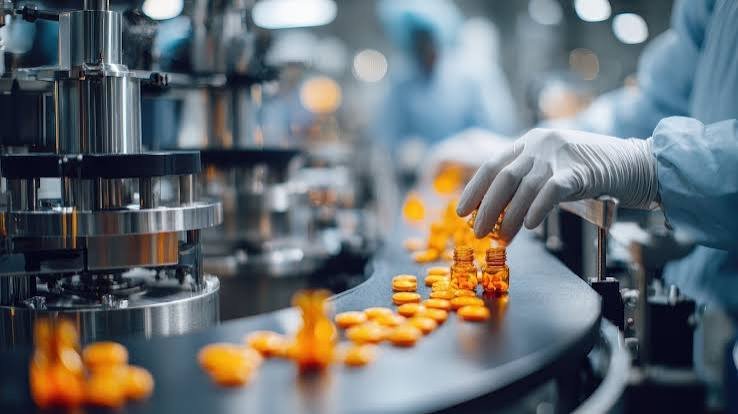
In practice, that often comes down to optimisation. For example, improving cleaning and disinfection protocols can reduce cycle times, minimise water and energy use, and at the same time improve operational throughput and productivity. More efficient chemistries and well-designed processes also help reduce waste and extend equipment life, which supports both cost control and overall efficiency.
We’re also developing solutions specifically with this balance in mind. For example, innovations like our rapid sporicidal technologies are designed to deliver effective contamination control while being less harsh on surfaces and easier to handle in practice, helping reduce material degradation, improve operator experience and support more efficient cleaning cycles.
We also take a very data-led approach. Through site assessments, monitoring and ongoing optimisation, we help customers understand where resources are being used across their operations and where there are opportunities to improve. That allows teams to make targeted, practical changes that deliver measurable gains, whether that’s reducing utility costs, improving productivity or standardising performance across sites.
The key point is that these objectives aren’t in conflict. When processes are optimally designed , they naturally become more efficient and less resource intensive.
For our customers, that means sustainability becomes something that supports operational performance, rather than something they have to trade off against it.
Q3: What role does digital monitoring and predictive analytics now play in contamination prevention and facility optimization?
Digital is becoming a really important layer in how manufacturers manage their processes, including contamination control. Traditionally, a lot of that work relied on periodic checks and manual processes, which meant issues were often identified after the fact.
What digital monitoring can do is give teams real-time visibility into what’s happening across their operations. That could be environmental conditions, cleaning performance, or equipment status. Instead of relying solely on snapshots, manufacturers can see trends as they develop and act earlier.
Predictive analytics takes that a step further. By analysing patterns in the data, it allows teams to identify where things are starting to drift before they become a deviation or a contamination event. That shift from reactive to proactive control is one of the biggest changes we’re seeing in the industry.
From a Biopharma perspective, this has a very practical impact on the floor. Digital tools can reduce reliance on manual documentation, improve data integrity, and support audit readiness through automated records and real-time tracking. At the same time, they help standardise processes across sites, which is critical as operations become more global and distributed.
Importantly, it’s not about replacing expertise. The value comes from combining data and insight with technical know-how, so teams can make faster, more confident decisions while maintaining control.
Overall, digital monitoring and predictive analytics are helping turn contamination control into a more continuous, data-driven process, rather than something that’s checked periodically and retrospectively.
Q4: As biologics manufacturing expands globally, how are cleaning and validation requirements evolving?
As manufacturing becomes more global, what we’re seeing is a shift toward much more standardised but also more risk-based approaches to cleaning and validation.
Companies are now operating across multiple sites, regions and regulatory frameworks, so there’s a real need to create consistency without losing sight of the specific risks associated with different processes and regulations. That’s driving a move toward more structured contamination control strategies that can be applied globally but still tailored at a site level.
At the same time, regulatory expectations have increased. Requirements like EU GMP Annex 1 have changed the conversation, moving manufacturers away from routine cleaning procedures toward approaches that are clearly justified, science-led and embedded across the full lifecycle of operations.
Validation is evolving in a similar way. Rather than being treated as a one-off activity, there’s now much more focus on maintaining a validated state over time. That becomes especially important as facilities become more flexible, handle multiple products, and operate under greater time pressure.
From a Biopharma perspective, digitalisation is playing a bigger role here as well. Tools that support real-time monitoring, automated documentation, data integrity and the validation lifecycle are helping manufacturers demonstrate compliance more clearly, while reducing manual effort and supporting more consistent execution across sites.
Overall, the direction is toward more integrated, lifecycle-based approaches, where cleaning and validation are designed to support global scalability without compromising control.
Q5: What industry trends do you believe will most shape the future of life sciences manufacturing infrastructure over the next decade?
What’s becoming clear is that the traditional model of large, centralised manufacturing facilities is starting to evolve. The industry is moving toward a much more flexible, automated, digital, modular and technology focused approach, often referred to as Pharma 4.0.
A big driver of that is the shift toward more complex and specialised therapies. Modalities like cell and gene therapies, as well as newer biologics, require facilities that are designed around specific processes rather than a one-size-fits-all model. That’s leading to more purpose-built, modality-specific environments and a greater emphasis on flexibility from the outset.
At the same time, digital is becoming a core part of how facilities operate. Real-time monitoring, integrated data systems and predictive analytics are no longer optional, they’re central to maintaining compliance, ensuring data integrity and enabling faster, more confident decision-making across sites.
We’re also seeing increasing adoption of process intensification. The focus is on doing more within the same footprint, improving yields, reducing cycle times and making better use of available capacity.
Sustainability is another defining trend, particularly in how facilities are designed and run. Companies are looking at reducing water, energy and material usage from day one, rather than retrofitting solutions later. In many cases, digital toolsand smarter process design and execution are helping drive tangible improvements in resource efficiency.
From our viewpoint at Ecolab Life Sciences, this all reinforces the need for integrated contamination control strategies that are built into facility design and supported through digital monitoring and consistent global execution.
Overall, manufacturing infrastructure is becoming more specialised, more connected and much more focused on agility and control.







© 2026 Biopharma Boardroom. All Rights Reserved.