16 July 2026 | Thursday | Interaction
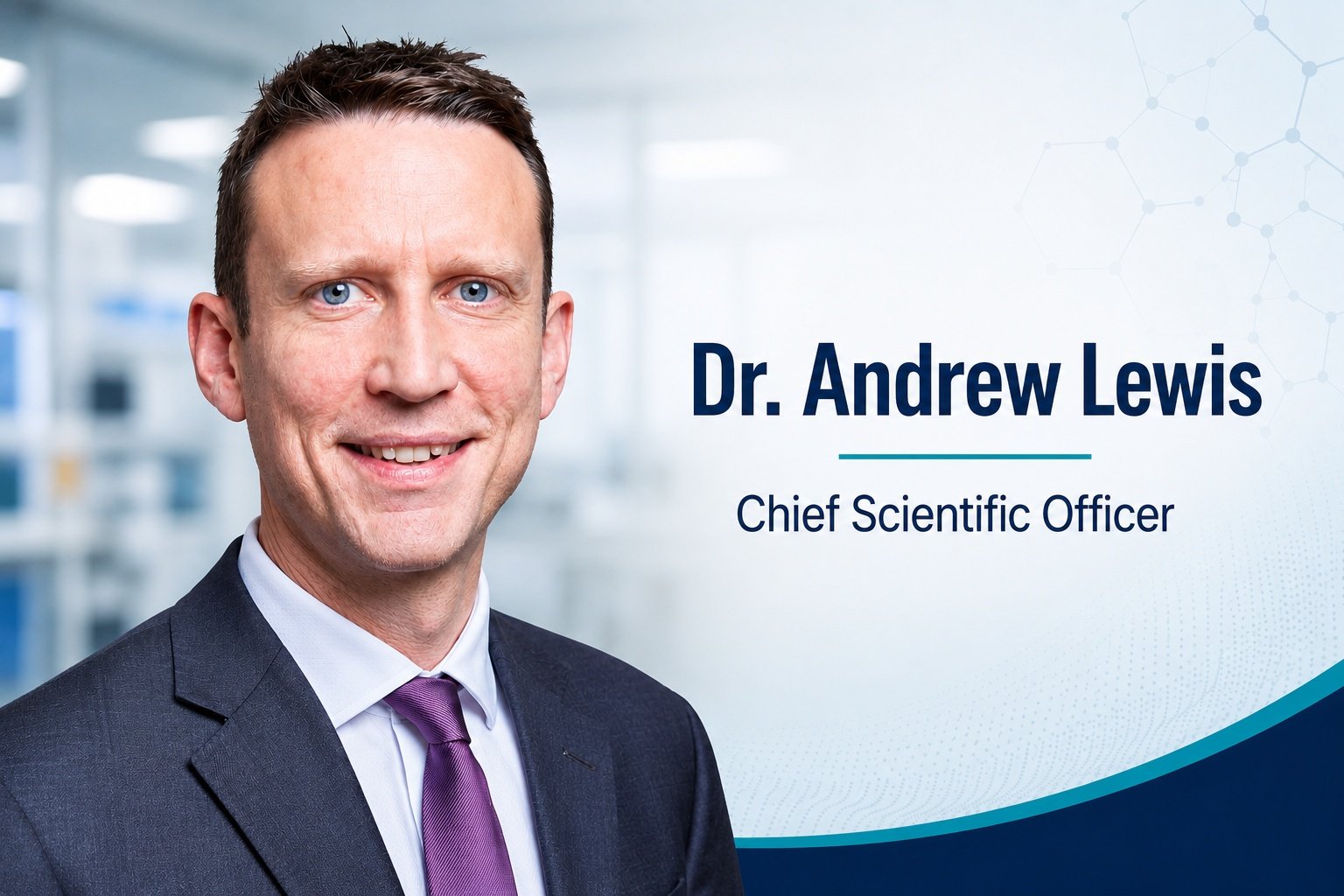
As artificial intelligence and advanced technologies transform the pharmaceutical industry, leaders face the challenge of harnessing innovation without losing sight of scientific integrity, regulatory compliance, and patient outcomes. In this interview, Dr. Andrew Lewis, Chief Scientific Officer at Quotient Sciences, shares his perspective with BioPharma BoardRoom on integrating AI into drug development, fostering collaborative organizational cultures, and the leadership qualities that will define successful biopharma companies in the years ahead.
Scientific innovation is advancing at an unprecedented pace, with AI, advanced analytics, and novel therapeutic modalities reshaping the drug development landscape. From a leadership perspective, how can biopharma organizations embrace these innovations while ensuring they remain focused on delivering tangible patient and business outcomes rather than simply pursuing technological trends?
Given the tremendous potential of these technological advances, many of which may well become disruptive, it is clear to me we need to adapt and adopt them. In the case of AI the potential applications are manifold, and without a coherent strategy with appropriate governance the risk is that effort is spent developing niche applications that don’t meet an unmet need and/or with little return on investment. As a guiding principle I’m reminded of a Steve Jobs quote: “You’ve got to start with the customer experience and work backwards to the technology. You can’t start with the technology and try to figure out where you’re going to try and sell it”. With that as a starting point, once the unmet need or pain point you’re trying to address is clear, and potential solutions identified, I think it’s essential that decisions on what to invest in and which solution to develop follow the same rigorous returns analysis any other decision undergoes.
It then comes down to execution. The work we have been doing using AI to accelerate formulation development is demonstrating tangible benefits in terms of time savings, reduced drug substance demands and enhanced decision-making, however an algorithm does not achieve this on its own. Its success depends on embedding it within established workflows and aligning outputs with real‑world constraints and expert judgment. The future of drug development is not scientists versus algorithms. It is scientists and algorithms working together, each contributing what they do best.
Quotient Sciences has recently been involved in advancing the clinical development of an AI-designed drug product. What lessons did this experience provide regarding the practical role of AI in drug development, and where do you believe the technology can create the greatest value over the next five years?
Our experience developing a tablet formulation using AI has shown us it’s a powerful tool for our scientists to achieve meaningful time savings, reduce drug substance demands and provide a powerful insight into the Critical Quality Attributes of the drug product. As we advanced the product into the clinic we were unsure how the MHRA would view our intended use of the technology. We were grateful for an open dialogue with the MHRA before we submitted the Clinical Trial Application, which then obtained approval with no comments or queries on how we’re using it.
Over the next five years, the greatest value will come from refining how we use AI to not only accelerate formulation design, but also reduce the amount of clinical testing required to advance innovative drugs through development. Ultimately, the goal is how we can best enable faster, data‑driven decisions and improved clinical predictability via the use of AI tools.
As scientific and technological capabilities evolve, organizations must balance speed and agility with quality, regulatory compliance, and patient safety. How can leaders create cultures that encourage innovation and calculated risk-taking without compromising the rigorous standards required in pharmaceutical development and manufacturing?
We know that lives depend on the safety, quality, and rigor that goes into creating the formulations, the clinical protocols, the manufacturing standards, and everything else that makes up the drug development value chain.
Every development program will involve uncertainty and difficult trade-offs, but every regulatory submission demands explainability and accountability. A model alone cannot provide this, it can’t explain the rationale of how we designed a protocol and be held accountable for that. A regulator does not want to hear that an algorithm decided something: They want to understand the scientific rationale behind it, by a person, and I expect a human-in-loop will always be required to provide oversight of and take accountability for any AI guided decisions.
The industry is increasingly moving toward more integrated and accelerated development models. How do you see leadership approaches changing to support greater cross-functional collaboration between discovery, development, manufacturing, and regulatory teams, and what organizational structures are proving most effective?
Integration and agility are two aspects we’ve held close to our core values. We’ve enabled cross‑functional collaboration in every project by bringing formulation, manufacturing, clinical, and regulatory experts together, aligning experience with project needs.
This is also the core of our Translational Pharmaceutics® model, which we’ve applied for nearly two decades to the integrated services we know our clients could typically only find via working with numerous providers. Translational Pharmaceutics® shifts functional silos to unified, program-led structures with shared accountability.
That said, I think other scientific organizations that prioritize collaboration and the connection between different disciplines are ones that are going to be best set up for success.
Looking ahead, what do you believe will distinguish the most successful biopharma leaders over the next decade? Are there specific leadership qualities, strategic priorities, or organizational capabilities that will become increasingly important as the pace of scientific advancement continues to accelerate?
With the pace of technological change and innovation, the most important leadership qualities will be those around change management. I anticipate the current drug development paradigm will evolve and could look very different in the not too distant future. Teams, organizations and the nature of their work will need to evolve accordingly and managing those through this transformation well will distinguish the most successful leaders.


© 2026 Biopharma Boardroom. All Rights Reserved.