23 June 2026 | Tuesday | Interview
As demand grows for increasingly sophisticated DNA and RNA-based therapies, the industry's focus is expanding beyond scientific discovery to the infrastructure required to manufacture these innovations at scale. In this BioPharma Boardroom interview, Joe Hedley, CEO of NunaBio, discusses the evolving role of DNA manufacturing, the structural challenges facing nucleic acid production, and why next-generation manufacturing platforms will be critical to supporting the future of precision medicine and personalized therapeutics
Synthetic DNA and RNA technologies continue to gain momentum, but it can be a very noisy market. How does a company cut through the hype, and how is NunaBio differentiating itself?
Synthetic DNA and RNA are attracting significant attention, which can sometimes make it difficult to distinguish meaningful innovation from ambitious claims. There is genuine innovation in the market, but there is also a tendency to position technologies as solving foundational problems when they only address part of the system.
At NunaBio, we have deliberately taken a different approach. The industry does not just need more DNA suppliers. It needs a manufacturing model that can turn complex sequences into reliable, scalable and usable DNA without accepting the usual trade-offs between complexity, speed, scale and access. For that reason, we have focused less on optimising individual steps and more on rethinking how DNA is manufactured and deployed. A lot of what exists today improves components, but those components are still constrained by legacy architectures that were never designed for the demands of modern genomic medicine. Our view is that if the underlying problem has changed, then the manufacturing architecture needs to change with it.
Rather than viewing DNA simply as a biological product, we increasingly see it as a foundational material for biotechnology. That perspective changes the question from "how do we make DNA faster?" to "how do we build the infrastructure needed to support the next generation of therapeutics?"
This also means being realistic. The industry still expects low cost, high complexity and fast turnaround simultaneously. In practice, those are competing forces, and pretending otherwise does not help anyone build better systems.
Ultimately, cutting through the noise is about demonstrating where you genuinely solve problems, and being clear about where you do not.
As demand for mRNA therapeutics and genomic medicine accelerates, what are the biggest manufacturing bottlenecks developers are hitting today?
The biggest bottlenecks we see are not just technical, they are structural. The industry is trying to deliver new types of therapeutics using systems that were designed for a different model of medicine.
One of the core issues is the disconnect between development and manufacturing. Processes that work well at small scale do not always translate into robust, industrialised production. That gap remains one of the biggest barriers to clinical deployment.
Alongside that, the ecosystem is highly fragmented. From synthesis through to delivery, there are too many handoffs. Each one introduces variability, delay and risk, whether it is a technical interface or a logistics step. In many cases, what is described as a manufacturing problem is actually a supply chain or integration problem.
Another challenge is the growing demand for increasingly complex nucleic acid constructs. As therapies become more sophisticated, manufacturers need systems that can consistently produce materials that are difficult to generate using conventional approaches.
This reflects a larger issue. The current infrastructure is optimised for centralised, batch-driven production, not for digitally defined, rapidly evolving therapeutics.
The bottleneck is not a single step, it is the system. Until that system is redesigned to match the therapies it supports, those constraints will persist.
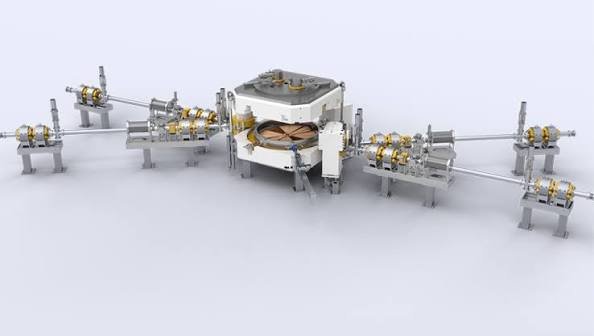
That is why NunaBio has developed a future-ready, fully integrated manufacturing model that performs synthesis, assembly and amplification of any DNA sequence in a single platform and can be flexibly deployed to ensure DNA supply is more accessible, secure and scalable at the point of need.
---
Clients obviously evaluate nucleic acid production partners on speed, purity, and scalability. Are there any hidden risks or overlooked factors they should be paying closer attention to?
Most partner evaluations focus on speed, purity and scalability, and those metrics clearly matter. However, they do not necessarily describe how a system performs under real-world conditions.
The factor that is often overlooked is complexity. Not just the complexity of the molecule, but how the manufacturing platform handles variation across sequences. Many systems work well under fixed conditions, but struggle as designs become more sophisticated or less standardised.
Closely linked to that is reproducibility. True scalability is not simply about volume, it is about maintaining consistent performance across different designs without having to redesign the process each time. If each sequence requires re-optimisation, then scalability becomes more theoretical than practical.
There is also a tendency to focus on visible metrics such as speed or cost. While important, these metrics can mask underlying constraints that limit what developers are ultimately able to build.
Developers should also consider the long-term flexibility of a manufacturing platform. Therapeutic modalities are evolving rapidly, and manufacturing approaches need to accommodate future requirements rather than simply meet today's specifications.
The key question is whether a platform expands what you can do, or limits it in ways that are not immediately obvious.
---
Beyond the science itself, what global macro-trends or external pressures do you think will drive the biggest changes in nucleic acid manufacturing over the next five years?
The next phase of nucleic acid manufacturing will be shaped as much by external pressures as by scientific progress.
Biosecurity is becoming a much more prominent factor. As synthesis capabilities advance, there is increasing focus on what is being made, where it is being made, and how materials and information move across borders. That is still evolving, but it will become a defining influence on how these technologies are deployed.
There is also a clear move towards greater localisation. Countries are beginning to view DNA and RNA manufacturing as strategic capability, which creates pressure to build in-country or with regional infrastructure rather than rely on global supply chains.
Supply chain resilience has become particularly important following recent global disruptions, highlighting the risks associated with concentrating critical manufacturing capabilities in a limited number of locations.
At the same time, energy and sustainability are becoming practical constraints. These processes are resource-intensive, and that has real implications at scale.
Overlaying all of this is greater integration between biology and digital technologies, from sequence design through to manufacturing execution.
Taken together, these trends suggest a future where nucleic acid manufacturing is increasingly viewed as critical infrastructure rather than simply a production service. The companies that succeed will be those that recognise that this is no longer just about science, but about having secure, reliable and controlled access to DNA at the point of need.
---
As personalized medicine advances, how will the physical manufacturing of these therapeutics need to evolve to better serve patients?
Personalised medicine challenges the assumptions that traditional manufacturing is built on. The existing model is designed to produce large volumes of a single product efficiently. Personalised therapeutics require smaller batches, higher variability and faster turnaround.
That shift cannot be accommodated by simply modifying existing infrastructure. It requires a different production model.
One of the key changes is the move toward more localised manufacturing. As therapies become more patient-specific, it becomes less efficient to rely on centralised facilities and complex global supply chains. Producing closer to the point of care reduces both time and logistical complexity.
The second challenge is variability. Biological processes are often sequence-dependent, which creates inconsistency as designs change. To make personalised medicine viable at scale, manufacturing needs to become more predictable and standardised, with systems that can execute different designs in a consistent way.
Ultimately, the goal is to make manufacturing as programmable as the biology itself. As personalised medicine advances, success will depend not only on therapeutic innovation but also on building manufacturing infrastructure capable of delivering those therapies reliably, at any time and in any location
Without that shift, manufacturing becomes the limiting factor, rather than the science itself.
As genomic medicine matures, innovation in manufacturing will become just as important as innovation in therapeutic design. The challenge for the industry is ensuring the infrastructure evolves at the same pace as the science.
---




© 2026 Biopharma Boardroom. All Rights Reserved.